
Last Friday, I spent an unforgettable evening at the historic Coronet Theatre, completely immersed in the profound creative world of the legendary South Korean architect and artist, Byoung Soo Cho. Listening to him speak was a masterclass in humility, nature, and the quiet respect of nature and spatial restraint.

He explained that his architectural and artistic practices are deeply guided by core Korean philosophies such as Mahk 막. This is the idea of intuitive spontaneity and rough, unfinished beauty. Present in Japanese and Korean ceramics which ask to be held or touched, the concept of Makh draws on raw and uninhibited shapes and Cho invited the audience to view his architectural designs. As well as challenging Western notions of space and design, since many were actually submerged rather than elevated building shapes, the architect’s desire to work with nature rather than to supplement it, was extremely touching.
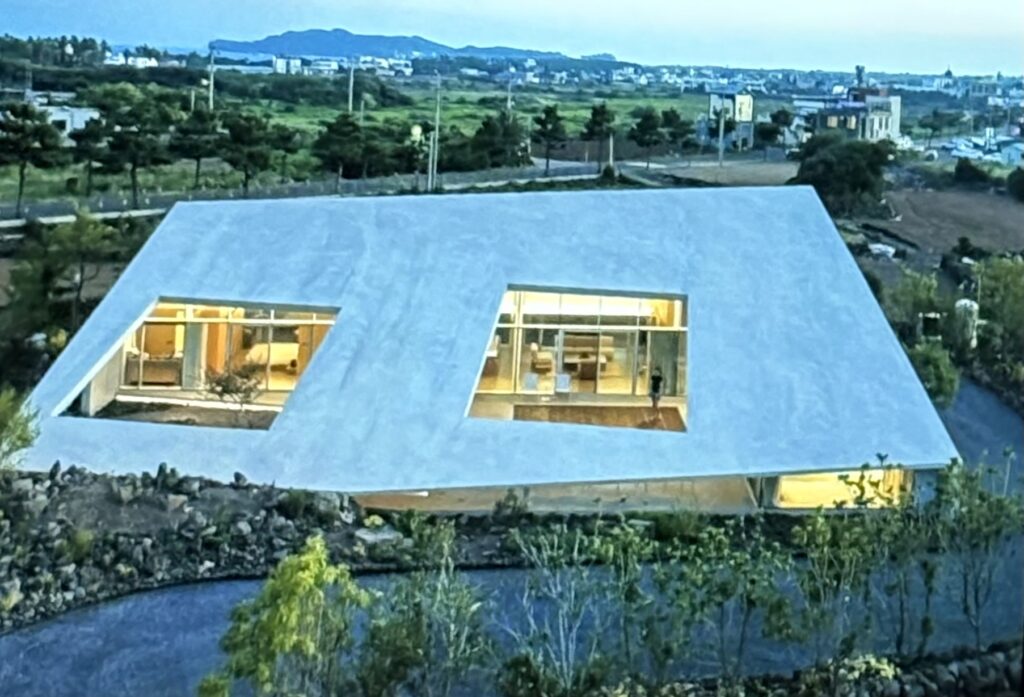
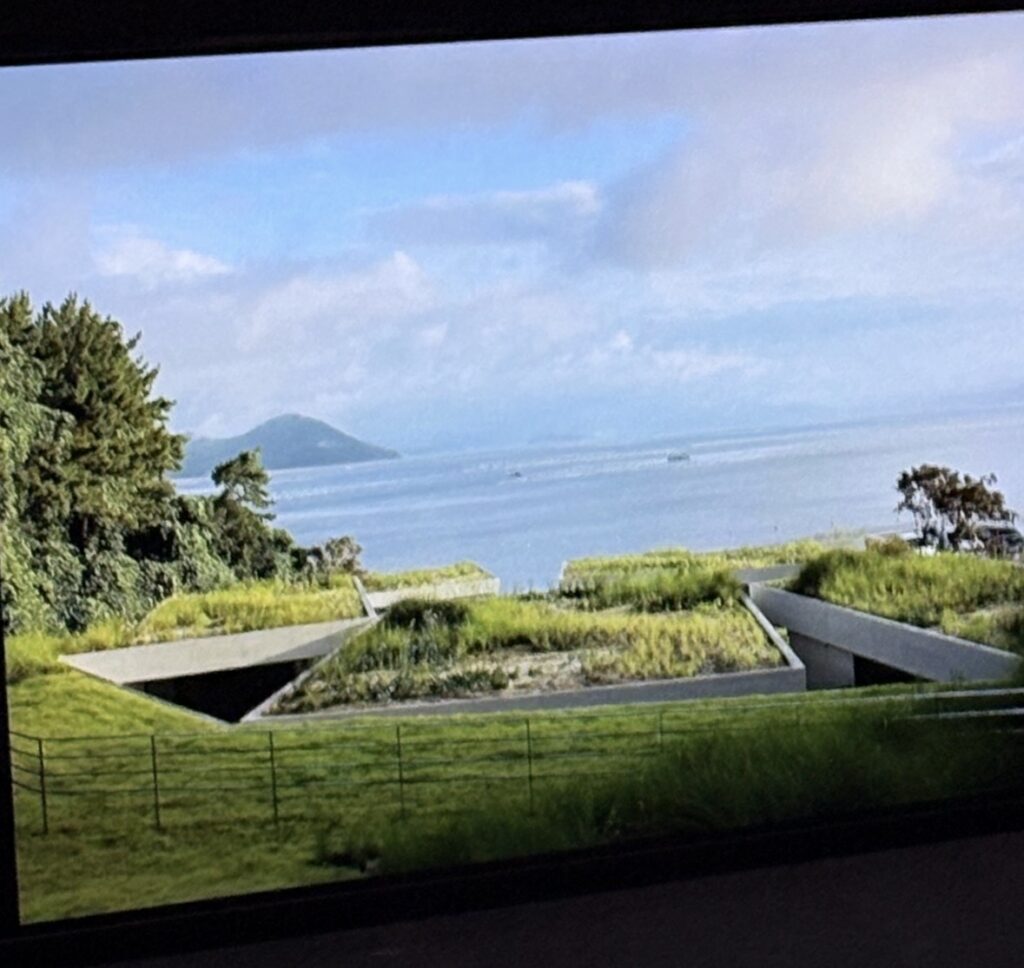
What fascinated me most was the way Byong Soo Cho’s architecture interacts with its surroundings. Unlike so many modern structures that loudly punctuate or disrupt the landscape, Cho’s buildings are thoroughly immersed in nature and he encourages nature, moss and weathering to actually engage with his the sunken courtyards and roof spaces. He designs in a way that allows the natural environment to completely “absorb” the structure, creating a seamless, meditative continuum between the earth and the built form.
It was particularly fascinating to hear him discuss his ongoing intellectual dialogue with the renowned architectural critic Kenneth Frampton regarding Mahk 막. Hearing them contextualize this raw, characteristically Korean aesthetic as an authentic concept, apart from Japanese examples and within global architectural theory, shed a whole new light on how we perceive materiality!
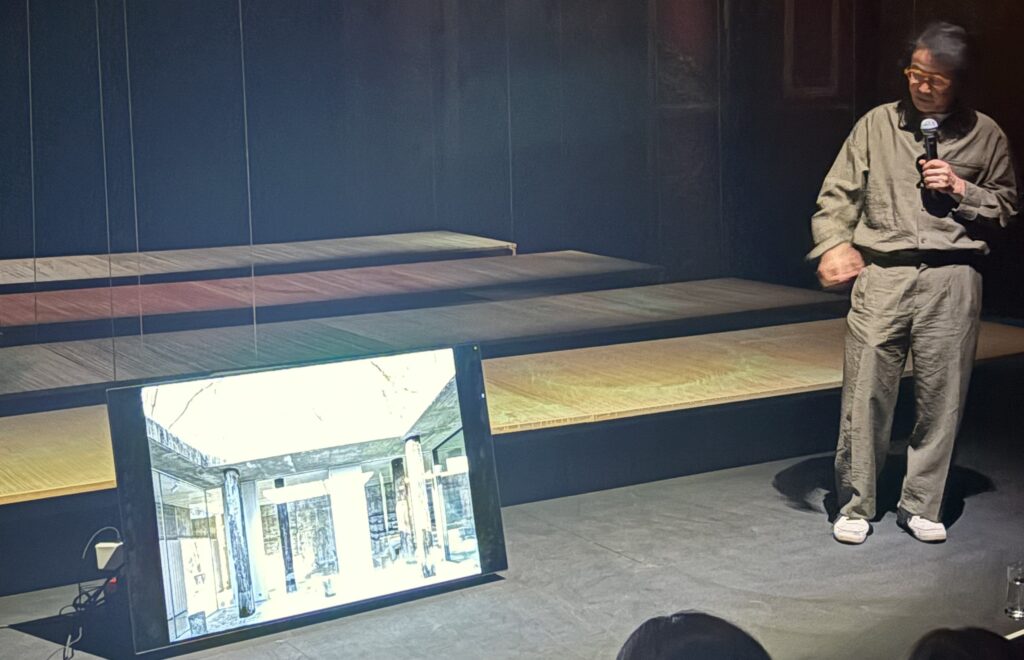
During the Q&A, I was lucky enough to ask him directly about his daring use of materials—specifically, how he beautifully marries heavy concrete ceilings with reclaimed timber columns (a brilliant structural experiment seen in his iconic Concrete Box House). Hearing him explain the growing or entirely different contraction rates and lifetimes of the two materials was a masterclass in organic engineering!
It perfectly exemplified his philosophy: letting materials exist as they are, respecting their natural shifts and imperfections over time.
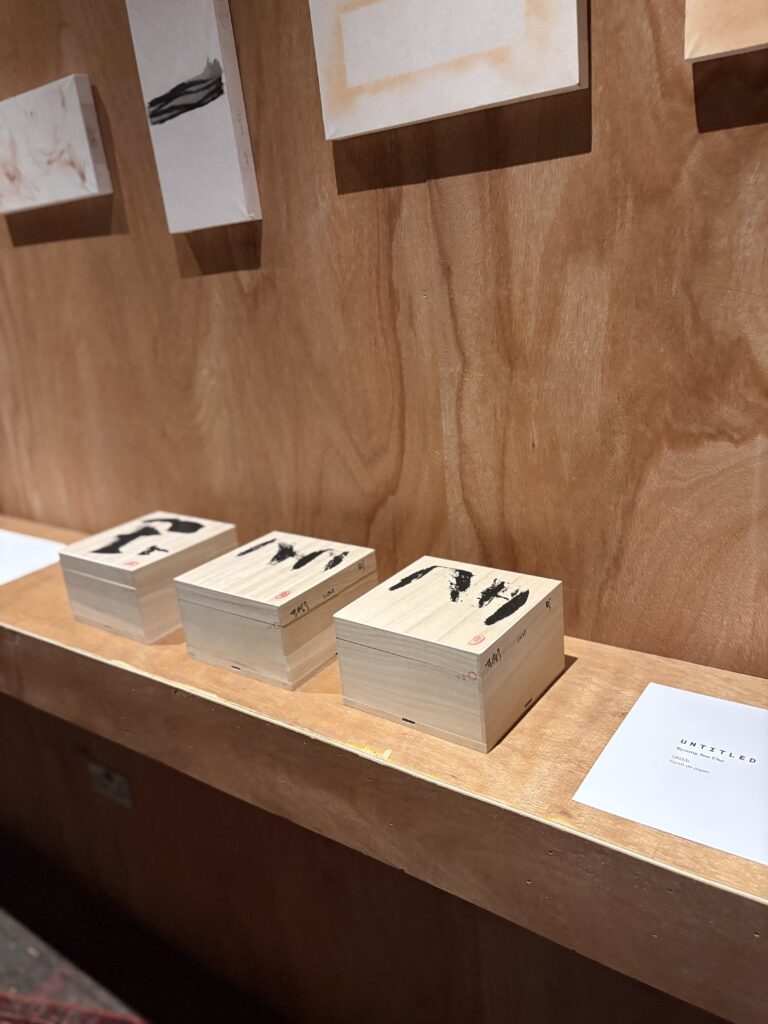
The Earth Works exhibition displayed in the foyer and bar beautifully mirrored this ethos. Seeing his organic, spontaneous ink strokes and textured canvases set against the majestic, quirky interior of the Coronet Theatre was stunning. The venue’s famously edgy, “Notting Hill” Victorian aesthetic provided the perfect, slightly weathered backdrop for an artist who finds perfection in the incomplete.
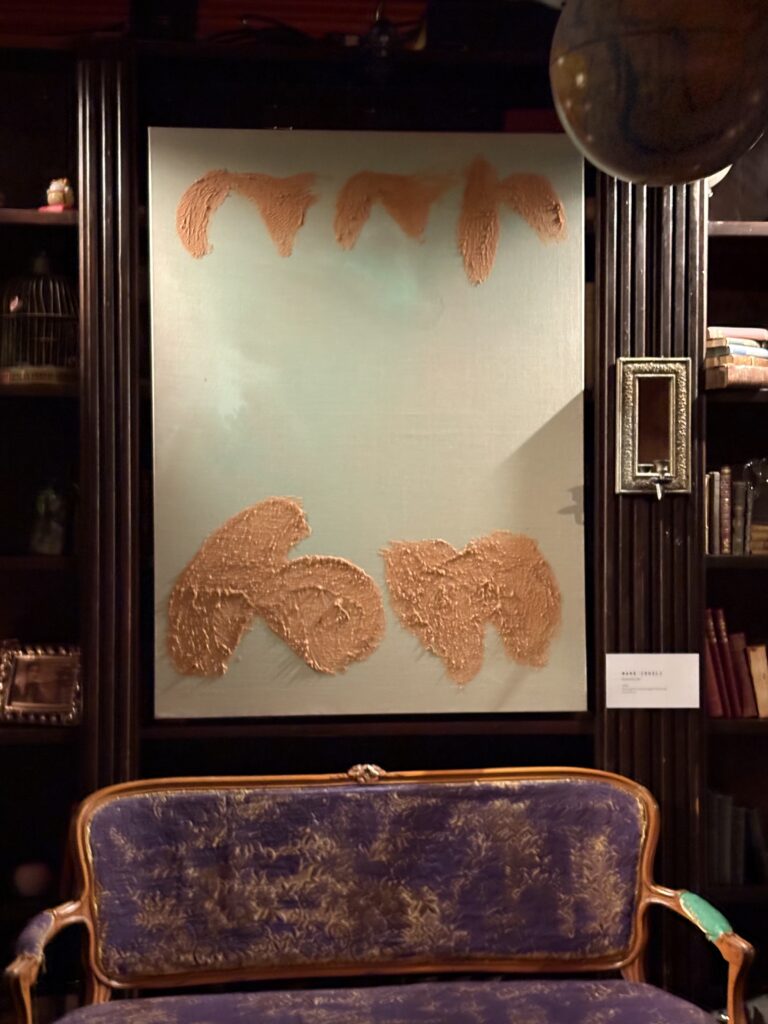
It was a joy to revisit such a beautiful, historic London landmark and leave with a completely renewed appreciation for space, material honesty, and the art of letting nature have the final word.
More Events